
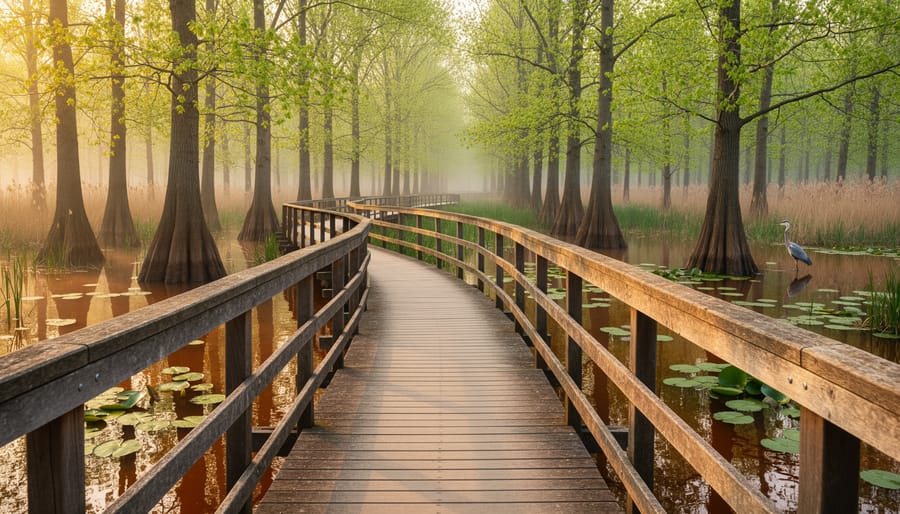
Step into one of Ontario’s hidden ecological treasures where boardwalks wind through ancient wetlands, rare orchids bloom in secret corners, and the haunting calls of herons echo across still waters. The Cobourg Creek Marsh and Swamp, locally known as swamp national park, offers visitors an intimate encounter with one of Lake Ontario’s most pristine coastal wetlands, right at the eastern edge of town.
This 24-hectare sanctuary preserves a thriving ecosystem where massive silver maples rise from tea-colored waters, creating cathedral-like canopies that shelter over 200 species of birds throughout the year. During spring migration, witness the marsh transform into a symphony of activity as warblers, ducks, and shorebirds pause here on their northward journey. Summer brings families of wood ducks paddling through lily-covered channels, while autumn paints the swamp in brilliant golds and crimsons reflected perfectly in the glassy water.
The accessible trail system welcomes everyone from serious birders with spotting scopes to families introducing children to their first turtle sighting. Whether you spend twenty minutes on the main boardwalk or dedicate hours to exploring every viewing platform, you’ll discover why locals consider this wetland their favorite escape from daily routines. The marsh proves you don’t need to travel far to find wilderness worth protecting, offering a powerful reminder of the natural wonders thriving right in Cobourg’s backyard.
What Makes Cobourg’s Swamp Park Special
Nestled in the heart of Cobourg, the Swamp National Park offers visitors a rare glimpse into one of Ontario’s most pristine wetland ecosystems. What truly sets this natural gem apart is its remarkable ability to showcase the delicate balance between land and water, creating a thriving habitat that supports an incredible diversity of plant and animal life. Unlike manicured city parks or typical hiking trails, this wetland sanctuary preserves nature in its most authentic form, allowing visitors to experience the kind of wild beauty that’s becoming increasingly rare in our developed world.
The park’s wetland ecosystem serves as a crucial environmental anchor for the entire region, acting as a natural water filtration system while providing essential breeding grounds for countless species. Walking through the park, you’ll discover why locals consider it a hidden treasure. The towering cattails sway gently in the breeze, while ancient willows drape their branches over mirror-like pools teeming with life. During spring and fall, the park transforms into a staging area for migratory birds, with over 200 species documented by enthusiastic birdwatchers who return year after year.
What really captures visitors’ hearts is the park’s accessibility combined with its wild character. Sarah Mitchell, a regular visitor from Toronto, shares her experience: “I’ve been coming here for five years, and every visit feels like a new adventure. The biodiversity is astounding, and you don’t need to be an expert to appreciate it.”
The wetland’s natural beauty changes dramatically with the seasons, offering photographers and nature enthusiasts endless opportunities to witness everything from spring wildflower blooms to dramatic autumn reflections. This dynamic landscape supports everything from tiny frogs and turtles to majestic great blue herons, creating an interconnected web of life that makes every visit memorable.
Wildlife Watching: What You’ll See
Best Times for Bird Watching
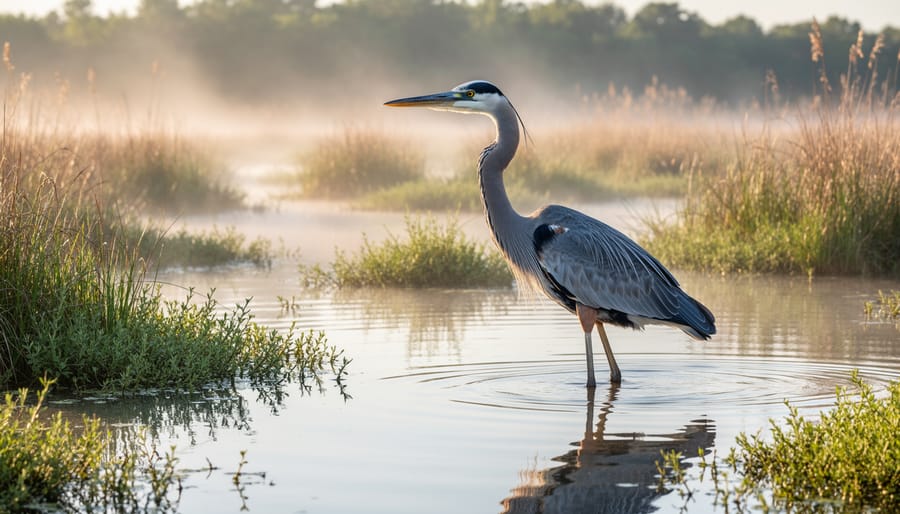
The magic of bird watching at Swamp National Park truly varies with the seasons, and trust me, each time of year offers its own special rewards! Spring migration, particularly from late April through May, is absolutely spectacular. You’ll witness waves of warblers, orioles, and thrushes stopping to refuel in the wetlands. Early mornings around 7-8 AM are prime time, especially along the boardwalk trails where the canopy meets the marsh.
Summer brings nesting season, when great blue herons, green herons, and wood ducks raise their young. June and July mornings offer fantastic opportunities to spot these families along the quieter marsh edges. Local birder Margaret from Cobourg loves to say that patience here pays off – she once counted 14 different species in a single morning visit!
Fall migration from September through October draws impressive numbers of waterfowl, including diving ducks and Canada geese. The observation platforms on the eastern trails provide excellent vantage points.
Winter might surprise you! Hardy species like northern shrikes and snowy owls occasionally visit the open areas. Bundle up for crisp December mornings, and you might be rewarded with sightings that summer visitors never experience. Regardless of season, bringing binoculars and wearing muted colors will enhance your bird watching adventure.
Amphibians and the Wetland Chorus
The wetlands truly come alive each spring with one of nature’s most enchanting performances—the amphibian chorus. From late March through May, the swamp resonates with the trills, peeps, and croaks of spring peepers, wood frogs, and chorus frogs calling for mates. It’s an unforgettable symphony that draws nature lovers from across the region.
You’ll find several salamander species here too, including the spotted salamander, which emerges on rainy spring nights for its annual breeding migration. Local naturalist Sarah Chen describes her first chorus experience as “absolutely magical—the sound surrounds you from every direction, and you can’t help but smile.”
For the best experience, visit during the golden hour just before sunset in April, when the chorus reaches its peak volume. The boardwalk trails offer excellent listening spots without disturbing these delicate creatures. Bring a flashlight for evening visits, but use it sparingly and keep voices low to avoid interrupting their important mating rituals. Wear waterproof boots if venturing off main paths, as spring brings higher water levels and muddy conditions that make the wetlands perfect for amphibian breeding.
Trails and Boardwalks: Exploring the Park
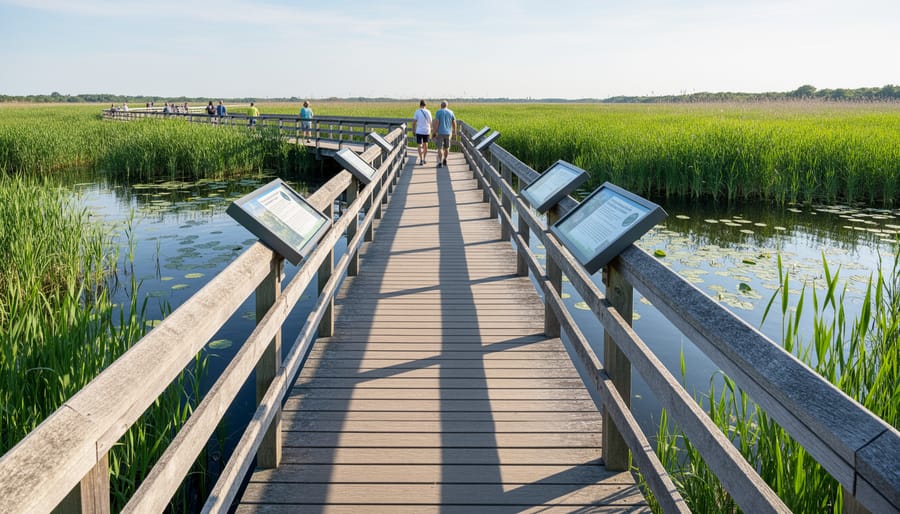
Stepping into the swamp’s network of trails feels like entering another world, where nature takes center stage and every turn offers something new to discover. The park features three main routes that cater to different experience levels and interests, all designed to immerse you in this remarkable wetland ecosystem while keeping you comfortable and safe.
The boardwalk system is the star attraction here, and for good reason. These elevated wooden pathways let you float above the wetland floor, bringing you eye-level with cypress knees and nesting birds without disturbing the delicate habitat below. Local photographer Maria Chen shares, “I’ve visited dozens of natural areas, but there’s something special about walking these boardwalks at sunrise. The mist rising from the water, the birds calling – it’s absolutely magical.”
| Trail Name | Length | Difficulty | Surface Type | Best For |
|---|---|---|---|---|
| Wetland Loop | 1.2 km | Easy | Boardwalk | Families, wheelchairs |
| Forest Edge Trail | 2.5 km | Moderate | Packed gravel | Photography, bird watching |
| Wilderness Circuit | 4.8 km | Moderate-Hard | Natural earth | Fitness, wildlife spotting |
The Wetland Loop is perfect for first-time visitors and families with young children. This fully accessible route includes three observation platforms with benches where you can rest and take in panoramic views of the marsh. The platforms are strategically placed at prime wildlife viewing spots, and you’ll often find locals here during evening walks, sharing tips about recent turtle sightings or which birds are migrating through.
For those seeking a longer adventure, the Forest Edge Trail winds through transitional habitat where swamp meets upland forest. Expect slightly uneven terrain but nothing too challenging. The Wilderness Circuit requires sturdy footwear and moderate fitness, but rewards adventurous visitors with secluded corners of the park that feel completely untouched.
Photography and Nature Observation Tips
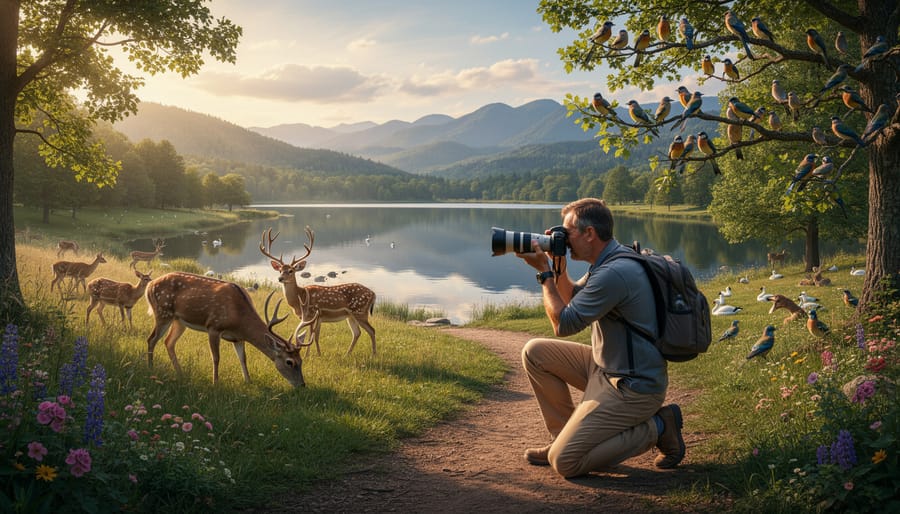
Capturing the magic of the swamp requires more than just pointing and shooting. The park truly comes alive during the golden hours, when soft morning light filters through the mist or evening sun casts that warm glow across the wetlands. Local photographer Sarah Chen, who’s been documenting the area for five years, swears by arriving an hour before sunrise. “The early morning fog creates this ethereal quality that you just can’t replicate any other time of day,” she explains.
For gear, you don’t need to break the bank. A decent telephoto lens (200-300mm range) lets you capture wildlife without disturbing them, and a sturdy pair of waterproof boots matters more than the fanciest camera body. Many visitors find success with smartphone cameras paired with portable tripods for those low-light shots. Don’t forget extra memory cards and batteries, as the cold wetland air drains power faster than you’d expect.
Wildlife photography here demands patience and respect. Keep at least 30 meters from nesting birds and never chase animals for a better shot. “The best photos happen when you let nature come to you,” says Mark Thompson, a nature guide who leads photography walks through the park. He recommends finding a comfortable spot near the water’s edge and simply waiting. The stillness often rewards you with incredible encounters.
Bring a lens cloth because moisture is everywhere, and consider a rain sleeve for your camera during those unpredictable weather shifts. Most importantly, take time to actually experience the swamp beyond your viewfinder. Sometimes the best memories aren’t the ones you photograph, but the ones you truly see.
Planning Your Visit
Planning your visit to this beautiful wetland area is straightforward, and a little preparation goes a long way in ensuring you have an amazing experience. The park welcomes visitors year-round, though spring and fall offer the most spectacular wildlife viewing opportunities. Summer months bring lush greenery and active bird life, while winter transforms the landscape into a serene frozen wonderland perfect for snowshoeing.
The main parking area provides easy access to trailheads, and you’ll find it rarely fills up except during peak migration seasons in May and September. There’s no admission fee, making it a fantastic budget-friendly option for families and nature enthusiasts. Basic facilities including restrooms are available near the parking lot, though they may have limited hours during winter months.
Before you head out, make sure you’re properly equipped for swamp terrain. Waterproof hiking boots or rubber boots are absolutely essential – regular sneakers simply won’t cut it here, especially after rainfall when trails can get quite muddy. The marshland environment means mosquitoes and other insects are part of the package from late spring through early fall, so insect repellent is your best friend during those seasons.
Here’s what you should pack for your visit:
- Waterproof footwear with good ankle support
- Insect repellent (DEET-based works best)
- Binoculars for birdwatching
- Water bottle and snacks
- Sun protection including hat and sunscreen
- Camera with zoom lens for wildlife photography
- Light rain jacket (weather can change quickly)
Local visitors recommend checking the weather forecast before your trip, as trails can become challenging after heavy rain. Early morning visits typically offer the best wildlife sightings and fewer bugs, plus you’ll beat the midday heat during summer months.
Making a Day of It: Nearby Cobourg Attractions
Why stop at just the swamp when Cobourg offers so much more to explore? Making a full day of your park adventure is easy, and honestly, I think that’s the best way to experience what our waterfront community has to offer.
Start your morning with a hearty breakfast at Groovy Tuesday’s on King Street – locals swear by their breakfast poutine and fluffy pancakes, perfect fuel before hitting the trails. After your swamp exploration, you’ll be ready for lunch, and The Woodlawn Inn provides an elevated dining experience with locally-sourced ingredients and a charming historic atmosphere.
Just a short drive from the park, Cobourg Beach beckons with its pristine sandy shores and iconic Victoria Hall anchoring the downtown skyline. The beach boardwalk is perfect for a post-hike stroll, and during summer months, you might catch live music at the bandshell. History buffs will appreciate Marie Dressler House, celebrating our Academy Award-winning actress, while the Sifton-Cook Heritage Centre offers fascinating glimpses into local history.
For dinner, Fusion House downtown serves exceptional Asian fusion cuisine in a cozy setting, or grab wood-fired pizza at The Buttermilk Cafe if you’re craving something more casual. One visitor told me they made the swamp park part of their “Cobourg trifecta” – nature in the morning, beach in the afternoon, and downtown dining to cap it off. It’s become their annual tradition, and honestly, that sounds like the perfect day to me.
Conservation and Community Involvement
The park thrives thanks to dedicated stewardship from both local organizations and passionate volunteers who work tirelessly to protect this precious wetland ecosystem. Throughout the year, you’ll find opportunities to get involved in habitat restoration projects, trail maintenance days, and wildlife monitoring programs. These hands-on experiences are a wonderful way to connect with nature while giving back to the community.
Educational programs run regularly, welcoming school groups and curious visitors of all ages. Local naturalists lead guided walks where you can learn about wetland ecology, spot native species, and understand why these ecosystems matter so much to our region. Many Cobourg residents share stories about how volunteering at the park has deepened their appreciation for the natural world right in their backyard.
Supporting the park is easy and meaningful. Consider making a donation to conservation initiatives, participating in seasonal clean-up events, or simply practicing Leave No Trace principles during your visit. Local businesses often partner with park conservation efforts, so your visit to the area supports preservation too. Every contribution, whether time or resources, helps ensure this natural treasure remains vibrant for future generations to explore and enjoy.
Whether you’re a nature enthusiast, a photography lover, or simply someone seeking a peaceful escape from everyday life, the swamp national park offers an experience you won’t find anywhere else in Cobourg. This hidden gem proves that you don’t need to travel far to discover remarkable natural beauty. The park’s serene boardwalks, diverse wildlife, and ever-changing seasonal landscapes create moments of genuine connection with nature that stay with you long after your visit.
Local visitors often share how the swamp has become their go-to spot for morning walks and quiet reflection, while tourists consistently rank it among their favorite discoveries in the area. There’s something profoundly calming about standing among ancient trees, listening to birdsong, and watching dragonflies dance across the water.
If you’re exploring Cobourg’s natural attractions, make this wetland sanctuary a priority on your itinerary. Pack your camera, bring your curiosity, and prepare to be surprised by just how enchanting a swamp can be. This isn’t just another nature walk – it’s an invitation to slow down, breathe deeply, and rediscover the simple joy of being surrounded by wilderness.