
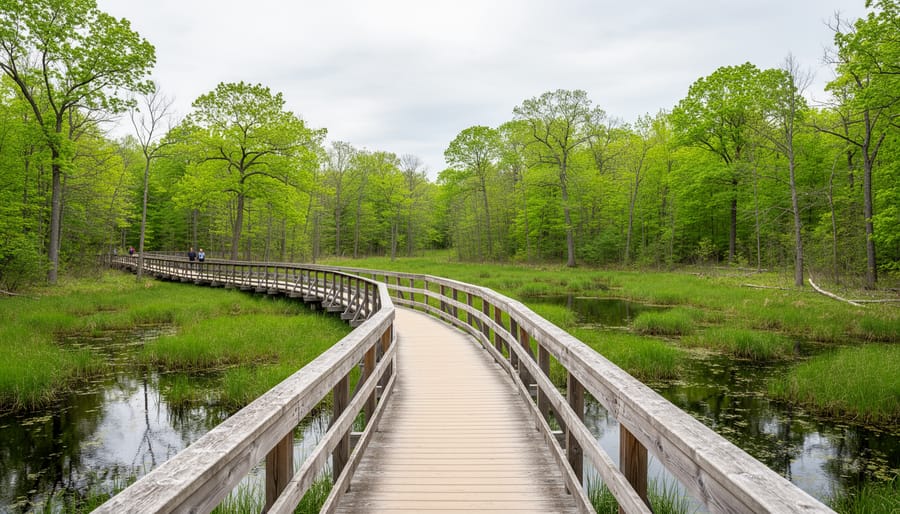
Trail 2 North Trailhead offers hikers a scenic 3.5-kilometer loop through Cobourg’s Conservation Area, perfect for families and casual walkers seeking an easy to moderate outdoor experience. Located just minutes from downtown, this well-maintained trail delivers a peaceful escape into mixed hardwood forest and wetland habitats, all while keeping you within reach of the town’s cafes and amenities for a post-hike treat.
Most locals consider this their go-to weekday trail when they need fresh air without committing to a full-day adventure. The trailhead sits at the northern parking area off D’Arcy Street, where you’ll find clearly marked signage and enough space for a dozen or so vehicles. Spring brings wildflowers and bird activity that make early morning hikes particularly rewarding, while autumn paints the canopy in brilliant oranges and golds that rival anything you’d find further north.
What sets Trail 2 North apart from other area trails is its accessibility without sacrificing natural beauty. You won’t find challenging rock scrambles or steep climbs here, but you will discover quiet boardwalk sections over marshy lowlands, shaded forest corridors that stay cool even on summer afternoons, and enough twists and turns to keep things interesting. The trail connects seamlessly with other Conservation Area routes if you’re looking to extend your hike, making it an excellent starting point for exploring Cobourg’s outdoor network.
Overview: Why Visit Trail 2 North Trailhead
Trail 2 North Trailhead stands out as one of Cobourg’s most versatile hiking access points, offering a genuine taste of Southern Ontario’s natural diversity without the crowds you’ll find at more popular trailheads. What makes it special is the immediate immersion into varied landscapes, within minutes of leaving your car, you’re surrounded by mature hardwood forest, and the path unfolds to reveal meadows, wetland edges, and rolling terrain that keeps the walk interesting from start to finish.
The trailhead serves as a gateway to roughly 3 kilometers of well-maintained paths that accommodate everyone from families with young children to experienced hikers looking for a peaceful morning walk. The terrain is gentle enough for beginners but offers sufficient variation, modest inclines, natural obstacles, and changing surfaces, to feel like a proper nature hike rather than a paved park stroll. You won’t need specialized gear, but you’ll want proper footwear since sections can be muddy after rain.
Wildlife enthusiasts particularly appreciate this trailhead because the blend of forest and open areas attracts diverse species. Regular visitors report frequent deer sightings, an impressive variety of songbirds, and seasonal waterfowl near the wetland sections. Early morning walks often reward you with the most active wildlife behavior.
Within Cobourg’s trail network, Trail 2 North occupies a sweet spot: more secluded than the main Victoria Park Beach trails yet more accessible than the remote woodland paths further north. You get solitude without sacrificing convenience, parking is straightforward, and the trailhead is clearly marked. For locals, it’s become a go-to spot for quick nature breaks during the week. For visitors, it offers an authentic slice of Cobourg’s natural character that complements the town’s waterfront attractions.
Trail Highlights and What You’ll See
1. Forest Canopy Section
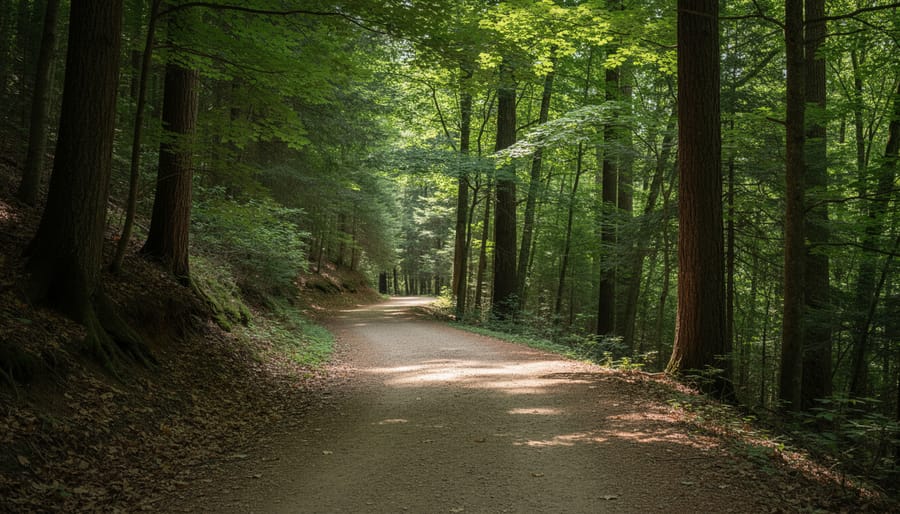
The forest canopy section begins shortly after you enter from the trailhead, immersing you in a mature hardwood forest dominated by maple, oak, and beech trees. This shaded corridor provides welcome relief during summer hikes, with the dense overhead coverage keeping temperatures noticeably cooler than open sections of the trail.
The forest floor here changes dramatically with the seasons. Spring brings a carpet of trilliums and wild leeks before the canopy fully leafs out. Summer shifts focus to ferns and moss-covered logs, while autumn transforms the area into a golden tunnel as maples turn brilliant orange and yellow. Winter strips away the understory, revealing the forest’s skeletal structure and making it easier to spot woodpecker activity on dead snags.
Watch for red squirrels darting between branches and listen for the distinctive calls of chickadees and nuthatches year-round. Early morning hikers often spot white-tailed deer feeding near the trail edges. The soft forest floor dampens footsteps, creating a quiet atmosphere that makes wildlife encounters more likely if you move slowly and observe patiently.
2. Meadow and Wetland Areas

Beyond the forest canopy, Trail 2 opens into expansive meadow sections that shift the hiking experience completely. These grassland stretches let sunlight flood in, creating ideal conditions for wildflowers from May through September. Early summer brings Queen Anne’s lace and black-eyed Susans, while late August showcases purple asters and goldenrod.
The wetland edges appear intermittently along the eastern portions of the trail, marked by cattails and standing water that draws an impressive variety of birds. Redwing blackbirds claim territory here in spring, their distinctive calls echoing across the marsh. You’ll often spot great blue herons stalking the shallow areas, especially during early morning hours before 9 AM.
Bring binoculars, the open sight lines make this section perfect for bird-watching without needing to venture off-trail. Spring and fall migration periods (April-May and September-October) offer the most diverse species counts. The meadow grasses also attract eastern bluebirds and various sparrow species year-round.
These open areas can feel exposed on hot days, so plan accordingly. There’s minimal shade until you re-enter the wooded sections, but the wildlife viewing opportunities make the sun exposure worthwhile for nature enthusiasts.
3. Scenic Overlooks and Rest Points
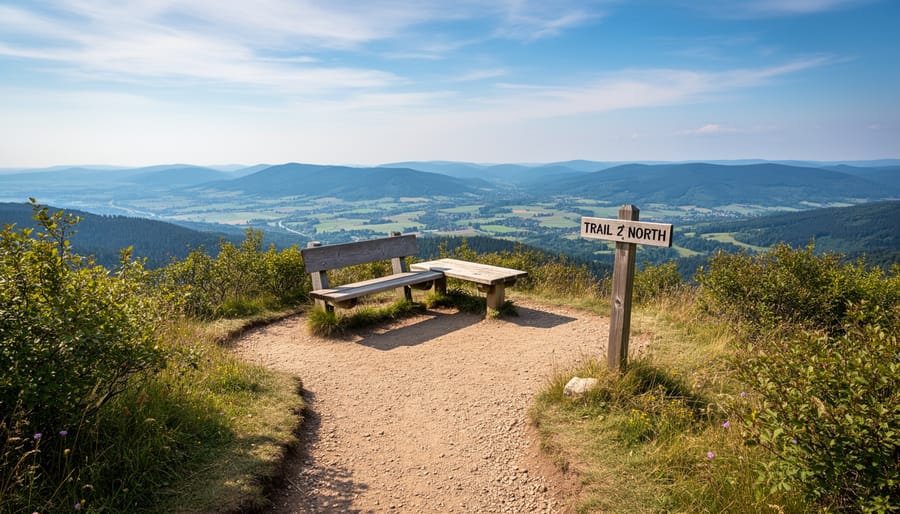
Trail 2 North features several well-placed spots where you can catch your breath and soak in the surroundings. About halfway along the main loop, you’ll find a sturdy wooden bench positioned at a slight clearing where the forest opens up. This spot offers a pleasant view across the wetland area and makes an ideal place to pause, especially during spring when migrating birds are active.
Further along, near the trail’s highest point, there’s a natural rock outcropping that serves as an informal viewpoint. While not dramatic elevation, it provides a satisfying vista over the tree canopy and neighboring meadow. Many hikers stop here for photos or a quick snack.
The trailhead itself has a covered picnic shelter with tables, perfect for before or after your hike. During warmer months, the shaded sections along the forest portion offer natural cooling spots where you can step aside and rest without needing a formal bench.
These rest points are spaced thoughtfully throughout the trail, meaning you’re never more than ten or fifteen minutes from somewhere comfortable to take a break. Bring water and take advantage of these spots, rushing through means missing some of the trail’s quieter pleasures.
4. Wildlife and Nature Watching
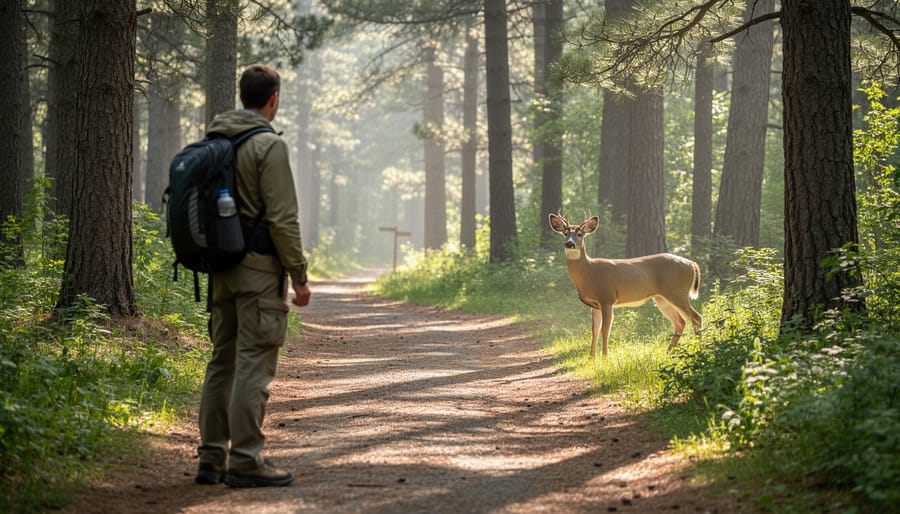
Trail 2 North Trailhead offers excellent wildlife viewing opportunities throughout the year, with patient observers often rewarded with memorable encounters. White-tailed deer are frequent visitors, particularly during early morning hours between dawn and 8 AM or in the evening just before sunset. You’ll also spot chipmunks and eastern gray squirrels foraging along the trail edges, while red foxes occasionally appear in the meadow sections during quieter periods.
Birdwatching enthusiasts should bring binoculars. The mixed habitat attracts red-tailed hawks soaring overhead, woodpeckers drumming in mature trees, and songbirds like chickadees and cardinals year-round. Spring migration (late April through May) brings warblers and thrushes, while summer offers glimpses of Baltimore orioles and eastern bluebirds in open areas.
For the best wildlife experiences, move quietly and pause frequently rather than rushing through. Keep a respectful distance, at least 50 feet from deer and other mammals. Never feed wildlife, as it disrupts natural behaviors and creates dependency. If you encounter animals on the trail, give them space to move away on their own. Stick to marked paths to protect nesting areas and minimize habitat disturbance.
Practical Information for Your Visit
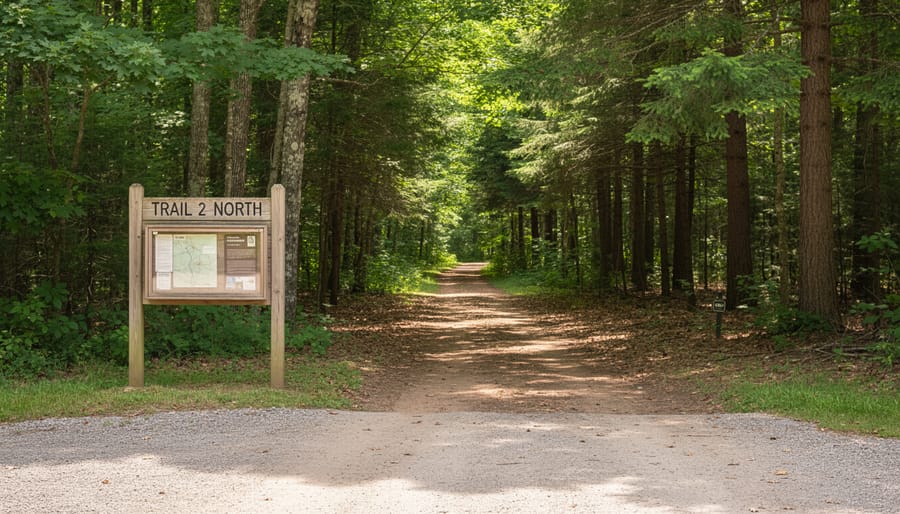
Getting to Trail 2 North Trailhead is straightforward. The trailhead is located at Koobs Nature Area accessible via Elgin Street West in Cobourg. If you’re coming from downtown, head west on King Street, turn north on Elgin, and watch for the park entrance on your left. The parking area sits just off Elgin Street, offering space for about 15 vehicles. During peak times on weekends and holidays, spots fill up quickly, so arriving before 10 AM gives you the best chance of easy parking. Overflow parking is available at the nearby Debow Recreation Complex roughly a five-minute walk from the trailhead.
| Feature | Details |
|---|---|
| Parking | Free, 15 spaces, overflow nearby |
| Facilities | No washrooms at trailhead; nearest at Debow Complex |
| Trail Length | 2.8 km loop from this trailhead |
| Difficulty | Easy to moderate, some uneven terrain |
| Accessibility | First 400m relatively flat; not wheelchair accessible beyond |
Trail conditions vary with the seasons. Spring brings muddy patches, especially in low-lying areas near the wetlands, so waterproof boots are smart. Summer offers the driest footing, though sections can get dusty. Fall means leaf-covered paths that hide roots and rocks, requiring extra attention. Winter sees occasional use by snowshoers, but the trail isn’t maintained for winter sports, pack traction aids if there’s ice.
The trail is open year-round from dawn to dusk. Early morning visits between 7 and 9 AM reward you with the best wildlife sightings and fewer crowds. Late afternoon, about two hours before sunset, offers beautiful light for photography and a quieter atmosphere.
Pack water, snacks, and insect repellent from May through September. A basic first-aid kit and fully charged phone make sense. The trail is well-marked with blue blazes, but a trail map from the kiosk at the parking area helps you navigate the junction points. Wear sturdy walking shoes with good grip; running shoes work in dry conditions, but hiking boots give you better ankle support on the uneven sections. Dogs are welcome on leash, and waste bags are provided at the trailhead, please pack out what your pet leaves behind.
Local Tips and Insider Advice
Regular hikers recommend arriving early on weekends, especially during fall when the foliage draws larger crowds. The trail sees fewer visitors on weekday mornings, giving you a better chance to spot deer and other wildlife undisturbed. If you’re hiking in spring, bring waterproof boots, sections near the wetland areas can stay muddy through May even after dry spells.
Local photographers suggest the hour before sunset for the best light in the meadow sections, though you’ll want a headlamp for the walk back through the forested portions. Winter hikers often combine this trail with other winter activities at Victoria Park, which sits just a short drive away. The trail typically stays accessible year-round, but packed snow can make the terrain more challenging from December through February.
For a full day outdoors, pair your hike with a visit to Cobourg Beach afterward, it’s less than ten minutes by car and offers a completely different landscape. You can also check the Cobourg Recreation website for guided nature walks that sometimes include Trail 2 North as part of their route. These programs offer deeper insights into local ecology and history.
Parking can fill up during peak times, so experienced visitors often use the secondary lot accessible from the east entrance. It’s a slightly longer walk to the trailhead but rarely full, even on busy Saturday mornings.
Frequently Asked Questions
Are dogs allowed on the trail?
Yes, dogs are welcome at Trail 2 North Trailhead but must remain on leash at all times. Please clean up after your pet and be mindful of other hikers and wildlife.
Is this trail suitable for beginners and families?
Absolutely. Trail 2 North offers gentle terrain with well-maintained paths, making it ideal for families with children and first-time hikers. The route is forgiving, with no steep climbs or technical sections.
Is the trail a loop or out-and-back route?
Trail 2 North functions primarily as an out-and-back route from the trailhead, though it connects with other trails in the Cobourg network if you want to extend your hike into a longer loop.
Can I hike this trail year-round?
Yes, the trail is accessible in all seasons. Summer and fall offer lush greenery and wildflowers, while winter provides peaceful snowshoeing opportunities. Spring can be muddy in the wetland areas, so waterproof boots help.
How long does it take to complete the trail?
Most hikers complete the main trail in 45 minutes to an hour at a leisurely pace, depending on how often you stop for wildlife watching or photos. It’s short enough for a morning walk but rewarding enough to justify the trip.
If you’re planning your first visit, these basics cover what most people want to know before hitting the trail. The straightforward nature of Trail 2 North means fewer surprises and more time enjoying what Cobourg’s natural spaces have to offer.